 sales@batterydeji.com
 English




Anyone who’s been in iPhone repair long enough has probably heard this a thousand times:
“Can you replace it with an original battery?”
If you say yes, the customer relaxes.
If you say no, they hesitate.
That’s why a lot of repair shops still push “OEM” batteries, even when supply is inconsistent and margins are tight.
But shops that actually handle serious repair volume already know something most people don’t:
Original doesn’t always scale better.
Here’s the uncomfortable truth
Most of the so-called “OEM batteries” on the market today aren’t truly factory-fresh original parts.
A lot of them are:
-
pulled from used devices
-
rebuilt cells
-
mixed batches
-
or simply relabeled aftermarket batteries
For smaller shops doing a few repairs a day, that might not be a huge issue.
But once your shop starts doing 20+ battery replacements daily, inconsistencies start showing up fast.
One batch performs fine.
The next batch has unstable health readings.
Then warranty returns start creeping up.
At that point, the problem isn’t the battery itself.
It’s the supply chain.
Why More Shops Started Testing Premium Aftermarket Batteries
To be honest, many technicians didn’t switch by choice at first.
OEM stock disappeared for weeks at a time, customers couldn’t wait, and shops had to look for alternatives.
Then something unexpected happened:
The callbacks never came.
Not the usual “good enough for now” kind of result either.
Customers used the phones for months without complaints.
That’s when many repair shops realized premium aftermarket batteries had changed a lot over the past few years.
They’re no longer the low-end products people remember from five years ago.
The Real Difference Is BMS and IC Quality
Battery capacity alone doesn’t mean much anymore.
What actually matters is:
-
BMS stability
-
fuel gauge accuracy
-
thermal control
-
charging behavior
-
iOS compatibility
If those systems are done properly, most users can’t realistically tell the difference between a premium aftermarket battery and an OEM one during daily use.
That’s why higher-end aftermarket batteries are becoming increasingly popular among repair shops.
What Most Professional Repair Shops Use Today
| Repair Scenario | Common Choice |
|---|---|
| Flagship refurbishing / premium customers | OEM original |
| Daily repair volume | Premium aftermarket(Deji battery) |
| Trade-in devices / bulk processing | Premium aftermarket |
It’s not that repair shops can’t afford OEM.
It’s that premium aftermarket batteries often make more business sense.
Why DEJI Batteries Became Popular in Repair Shops
The biggest reason is simple:
Consistency.
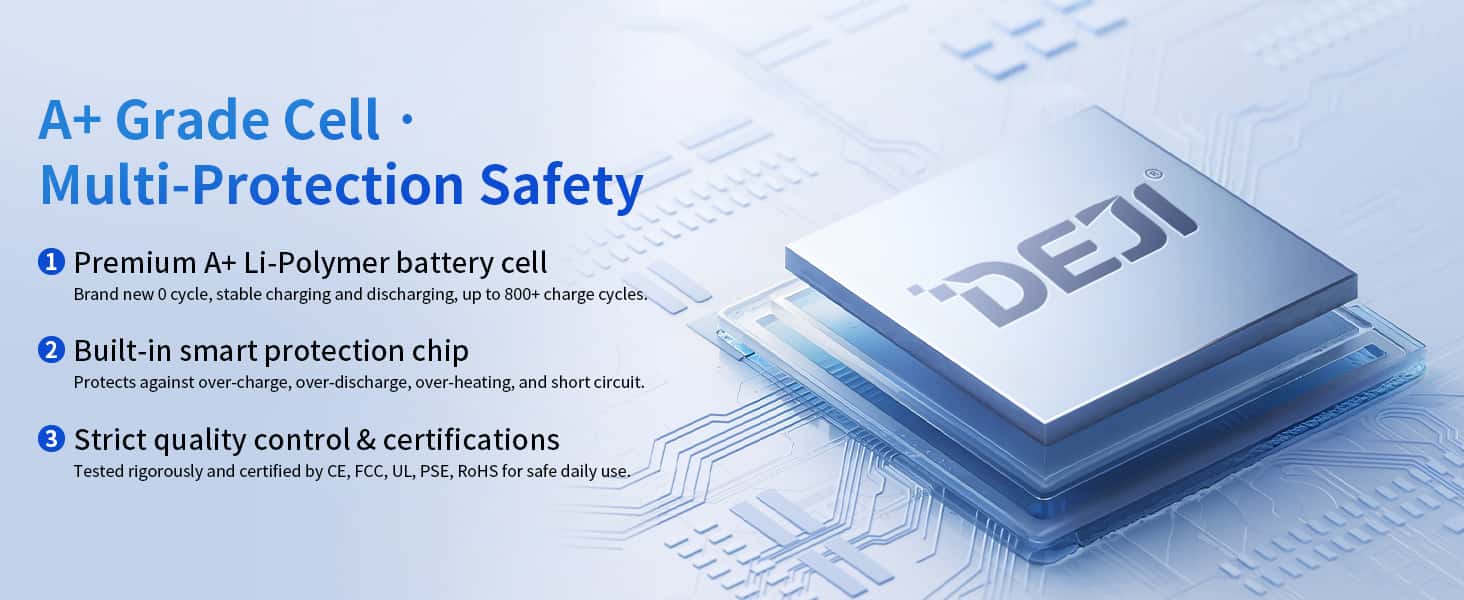
DEJI uses:
-
TI-based protection architecture
-
Japanese Seiko IC chips
-
dual-temperature protection
-
stable cycle performance beyond 500 cycles
For models like the iPhone 15 Pro Max, capacity can even reach 4760mAh while still maintaining stable power management.
Charging performance is optimized for PD fast charging, reaching around 60% in about 30 minutes.
But what repair technicians care about most is installation speed.
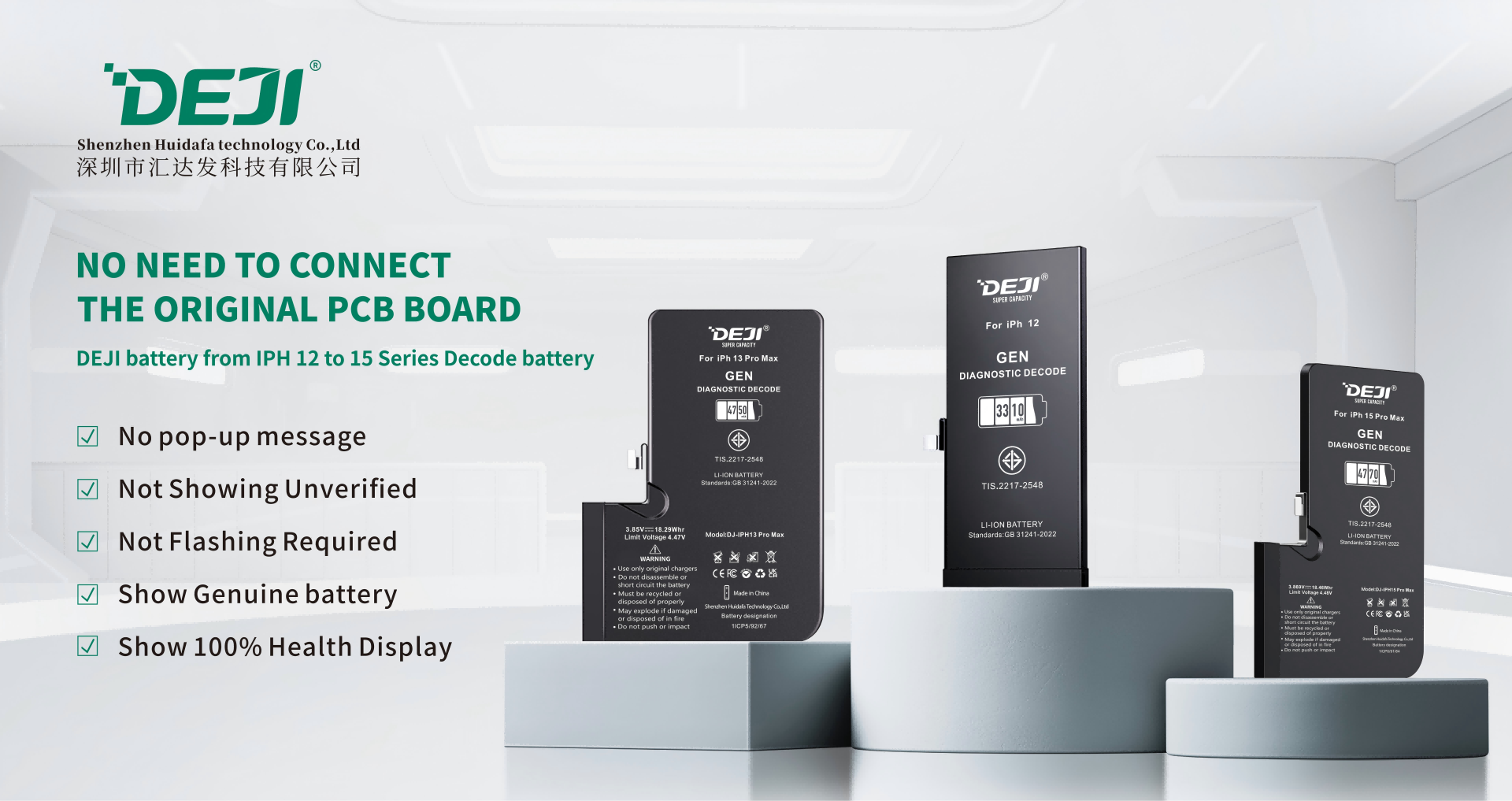
No welding.
No chip transfer.
No programming.
Install it, close the phone, run diagnostics — done.
Battery health displays normally, and there’s no “Unknown Part” warning after installation.
Some higher-end versions can even support “Genuine” battery identification after decoding.
For most customers, the experience feels no different from the original battery.
The Industry Is Quietly Changing
A few years ago, repair shops competed on one thing:
“Who can source original batteries?”
Now the competition looks very different.
The shops growing fastest today care more about:
-
supply chain stability
-
lower return rates
-
faster turnaround
-
consistent installation quality
Because once a repair business starts scaling, consistency matters more than marketing terms.
The fastest-growing repair chains usually aren’t using the most expensive batteries.
They’re using the most reliable ones.
And in this industry, reliability scales.